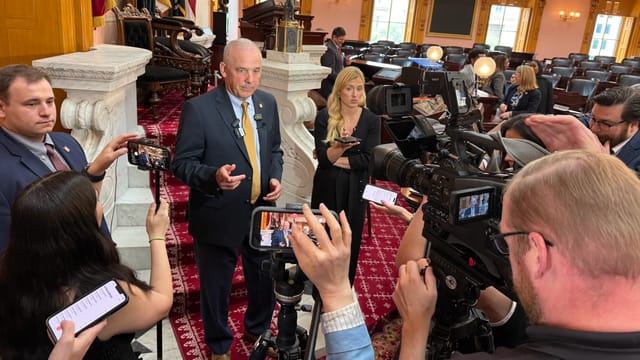
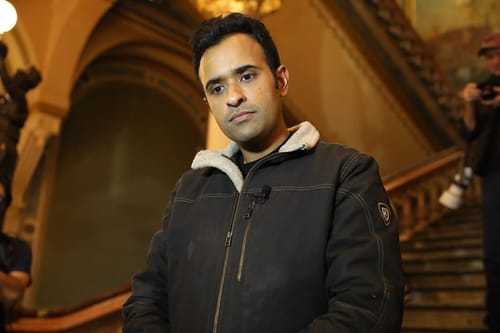
Republican gubernatorial candidate Vivek Ramaswamy has proposed rolling back Ohio’s local property taxes to levels they were at before the end of the COVID pandemic. A new analysis from Innovation Ohio finds that doing so would cut $6.6 billion per year from local government budgets by the time a new governor would actually take office — and Ramaswamy has not identified any replacement revenue source.
Ohio’s local governments currently levy approximately $24.7 billion in property taxes each year, an amount nearly equal to the combined total of the state’s income and sales taxes. Using tax year 2021 as the rollback baseline — the last year before pandemic-era property value increases began working through Ohio’s reassessment cycles — Innovation Ohio estimates the immediate gap at $4.0 billion per year. But because a governor taking office in January 2027 would not implement a budget until spring 2027, the policy would take effect against 2027 property values. At current growth rates, local taxing districts will levy approximately $27.2 billion by tax year 2027, meaning a rollback to 2021 levels would cut $6.6 billion annually. That figure represents roughly 60% of what Ohio’s entire state income tax generates in a single year.
Property taxes account for approximately 65% of all local tax revenue in Ohio, according to the Ohio Office of Budget and Management. The largest share — about three-fifths of all property tax revenue, or roughly $14.8 billion per year — funds local school districts. Innovation Ohio projects that a rollback would cut school funding by an estimated $2.4 billion per year at current values, growing to $4.0 billion by the time the policy takes effect. School districts would face pressure to lay off teachers and staff, increase class sizes, and eliminate programs including arts, music, and vocational education. Many districts also use property tax revenues to service bonds for school construction and renovation; the report notes a rollback would leave those obligations unfunded.
Ohio’s townships — home to more than a third of all Ohioans — would face some of the sharpest consequences. Unlike cities, townships cannot levy income or sales taxes, making property taxes their only significant revenue source. Voters in townships across Ohio have approved 3,190 levies specifically to fund police, fire, and emergency medical services, according to Policy Matters Ohio data cited in the report. A rollback to 2021 levels would reduce that funding with no alternative available, potentially forcing station closures, staffing reductions, and longer emergency response times.
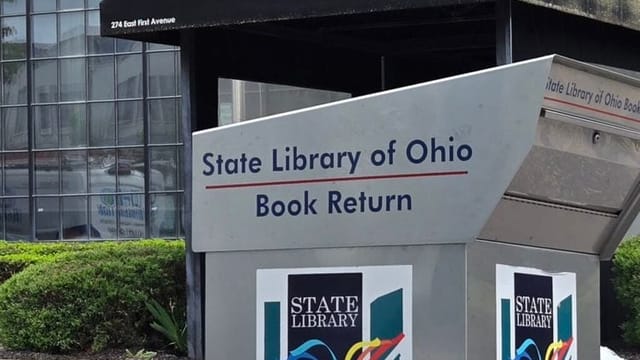
Libraries, county health boards, and senior services funded through voter-approved levies would also face cuts. More than half of Ohio public library funding comes from local property tax levies. County health and developmental disability boards — which fund mental health and addiction services, developmental disability programs, and public health functions — would lose a critical share of their operating budgets. Senior services including home-delivered meals, transportation, and in-home care funded through county levies would face reductions as well.
Beyond direct service cuts, Innovation Ohio and the Ohio Office of Budget and Management both note that local governments use property tax revenues to back bonds issued for schools, roads, water systems, and public safety facilities. A sudden reduction in that revenue base could put existing debt obligations at risk and trigger credit rating downgrades for local governments across the state, increasing future borrowing costs. Ohio achieved top-tier bond ratings for the first time in recent history; the OBM warned those ratings could also come under pressure from cascading local instability.
Ramaswamy is also pushing a separate proposal to repeal Ohio’s state income tax entirely. He has not specified which year’s property values he intends to use as a baseline for the rollback, and has not identified any replacement revenue for the projected losses.
Innovation Ohio’s analysis draws on levy data from the Ohio Department of Taxation’s Table TS-1, assessed property values and millage rates for all 4,478 Ohio taxing districts, and the OBM’s February 2026 analysis of complete property tax abolishment. The full report is available at innovationohio.org.