In Northwest Ohio, elections still mean something. When voters make a choice — especially by a clear margin — they expect it to be respected, even by lawmakers who disagreed with it.
That expectation is why Sen. Bill Reineke’s role in Senate Bill 56 deserves closer scrutiny.
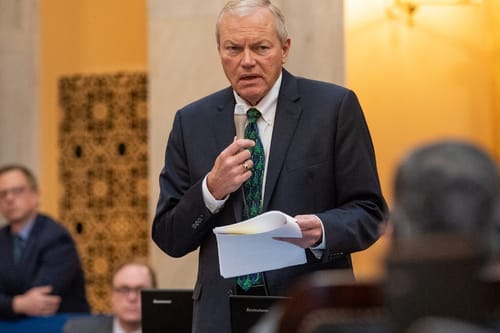
Reineke, a Republican whose district includes parts of Seneca, Crawford, Wyandot, and surrounding counties, was a cosponsor of S.B. 56, the legislation now headed to Gov. Mike DeWine’s desk that rewrites substantial portions of Issue 2, Ohio’s voter-approved marijuana legalization law. Issue 2 passed statewide in November 2023 with 57.2% of the vote, including support in many rural and small-town counties that Reineke represents.
S.B. 56 does not repeal legalization outright. Instead, it takes a more surgical approach — one that leaves the appearance of voter compliance while hollowing out key parts of the law Ohioans approved.
Under the bill Reineke cosponsored, activities voters were told would be legal are once again criminal offenses. Possession of marijuana purchased outside Ohio would no longer be protected from prosecution. Cannabis kept outside its original packaging could trigger criminal penalties. Home-grow violations would be punished more aggressively. Protections for workers, renters, and parents included in the voter-approved statute would be stripped away.
Perhaps most consequentially, the bill redirects marijuana tax revenue away from social equity programs, education, and addiction treatment — all spelled out in Issue 2 — and deposits that money into the state’s general revenue fund.
That is not a technical fix. It is a policy reversal.
Supporters of S.B. 56 argue that Issue 2 contained vague language and required legislative cleanup. But voters were not presented with a vague promise. They were presented with a detailed statute, written precisely because Ohio lawmakers have the power to amend citizen-initiated laws after passage. That power was not an accident. It was a known risk, and voters accepted it anyway.
What they did not accept was a rewrite that changes the law’s practical effect while keeping its title intact.
Reineke did not merely vote for S.B. 56. By signing on as a cosponsor, he helped advance the bill from the outset, aligning himself with a strategy that treats voter approval as provisional — valid until the legislature decides otherwise. The bill passed the Senate on a strict party-line vote, with Democratic lawmakers warning that it undermined the outcome of a statewide election.
For communities in Reineke’s district, the stakes are not abstract. Local governments that allow dispensaries were promised a share of marijuana tax revenue. Under S.B. 56, that promise is weakened, while funds voters directed toward addiction treatment and workforce programs disappear into Columbus’s general ledger.
None of this requires guessing at Reineke’s intent. The record is clear. His name is on the bill. The bill’s effects are explicit. And the voters whose decision is being narrowed live, in part, in the communities he represents.
Ohio’s constitution allows lawmakers to amend voter-initiated statutes. But legality is not the same as legitimacy. A system that routinely invites voters to participate directly in lawmaking, only to see their decisions reshaped afterward, risks turning civic engagement into performance.
Reineke has often framed himself as a defender of local values and accountability. Supporting S.B. 56 puts that claim to the test. When Ohioans voted to legalize marijuana and define how it would be regulated and taxed, they exercised the authority the constitution grants them. Undoing that choice — carefully, quietly, and after the fact — sends a message voters are unlikely to forget.
The question now is whether lawmakers like Reineke believe voter approval is binding, or merely advisory.
On Senate Bill 56, he made his answer clear.