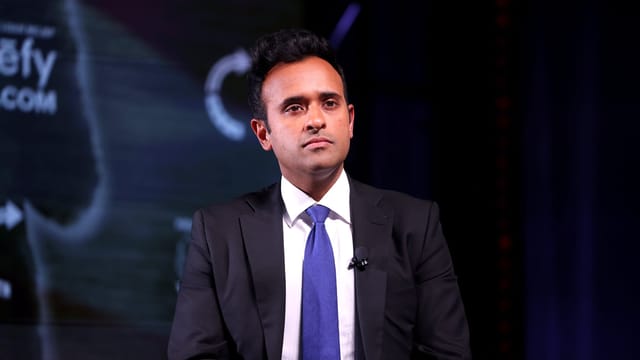

A new report from progressive policy group Innovation Ohio contends that GOP gubernatorial nominee Vivek Ramaswamy holds personal investments across every tier of the data center industry he would regulate as governor.
The May 2026 report, titled Vivek Ramaswamy’s Data Center Portfolio: Divided Loyalties, draws on Ramaswamy’s 2025 financial disclosure filed with the Ohio Ethics Commission in April. The group says the filing shows holdings in chip manufacturers, cloud and data center operators, industrial real estate trusts, infrastructure funds, and cryptocurrency — sectors that all stand to gain from continued data center expansion in Ohio.
“As governor, Ramaswamy’s policies and investments could ensure that he continues to cash in while the rest of us fall behind,” Innovation Ohio President Michael McGovern said in a statement accompanying the report. “Even if a data center project or policy isn’t in Ohioans’ best interest – it will almost always be in his.”
Ohio’s data center boom
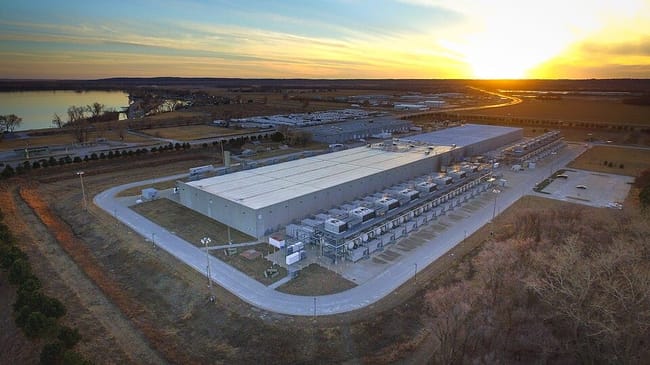
Ohio is home to roughly 200 data center facilities and ranks fifth nationally by count, according to the Innovation Ohio report. The state and local governments have provided about $2.5 billion in tax incentives to the industry since 2017, and companies have announced plans to invest tens of billions of dollars more by 2030.
The cost of Ohio’s data center sales tax exemption alone reached approximately $1.6 billion in 2025, according to figures the Ohio Department of Taxation provided last week — about 11 times the department’s original $136 million estimate. Local sales-tax breaks added another $446.3 million in foregone revenue in 2024, the department said.
In March, the federal government announced plans for what would be the largest data center project ever built in the United States: a $33 billion natural gas power plant and up to $40 billion in data center construction at Pike County’s former Portsmouth Gaseous Diffusion Plant.
What the report says about Ramaswamy’s holdings
Innovation Ohio’s analysis lays out Ramaswamy’s stake across what it calls the “AI data center supply chain”:
Chips and semiconductors. The report says Ramaswamy holds NVIDIA stock both directly and through the Strive U.S. Semiconductor ETF (ticker: SHOC), a fund he co-founded. NVIDIA makes the dominant AI processing chip used in data centers worldwide. The fund also holds Intel, which received $150 million in JobsOhio grants and up to $8.5 billion in federal CHIPS Act funding for its semiconductor campus in New Albany, according to the report. Ramaswamy’s SHOC holdings were valued between $1 million and $5 million on his 2023 federal disclosure.
Cloud and data center operators. The disclosure shows holdings in Microsoft, Amazon, and Apple — companies that operate large data center footprints in Ohio.
Real estate and infrastructure. Ramaswamy holds shares in four industrial real estate investment trusts — Prologis, Plymouth Industrial REIT, Rexford Industrial Realty, and Terreno Realty — as well as the NYLI CBRE Global Infrastructure Megatrends Term Fund, which targets digital infrastructure assets including data centers.
Energy. The report notes that Ramaswamy’s campaign received $16,615 from the Vistra Employee PAC. Vistra Corp. is one of three nuclear energy providers announced in January to power Meta’s Prometheus AI supercluster in New Albany. The report also flags that TerraPower, which it says is scouting Ohio sites for its Natrium reactor campus, is backed by NVIDIA’s venture arm.
Cryptocurrency. Ramaswamy holds Bitcoin and Ethereum personally through a Coinbase wallet, and his asset management firm Strive, Inc. holds more than $50 million in Bitcoin, according to the report. Ramaswamy has publicly backed Ohio House Bill 18, the Ohio Strategic Cryptocurrency Reserve Act, which would authorize the State Treasurer to invest up to 10% of state interim funds in digital assets and permit Ohio’s public pension systems to invest in crypto-linked products.
What a governor controls
The report argues that the conflicts run through nearly every state body that touches the data center industry. As governor, Ramaswamy would appoint all nine members of the JobsOhio board, which awards economic development incentives; control appointments to the state Tax Credit Authority, which approves and monitors corporate tax breaks; and oversee the Ohio Power Siting Board and the Public Utilities Commission of Ohio, which permit new power generation and decide how the cost of grid upgrades is divided among ratepayers.
Industry donors
The report also highlights contributions from data center industry figures to Ramaswamy’s campaign, citing Ohio Secretary of State filings. Those donations include $16,615 from Rene Haas, CEO of ARM Holdings; $16,615 from Christopher Adams, CEO of Cleveland-based data center maintenance firm Park Place Technologies; and $33,231 combined from Reece and Frank Crivello of Phoenix Investors, a firm that converts industrial sites into data centers across 27 states.
Communities push back
The findings land as local resistance to data center expansion grows. Innovation Ohio’s report says at least 15 Ohio municipalities have enacted moratoriums on new data center construction, though other recent reporting from the Statehouse News Bureau and Ideastream Public Media puts the number of communities considering or enacting pauses at around 18, including Cleveland, where a one-year moratorium was introduced in April.
A separate group of citizens in Adams and Brown counties is gathering signatures for a proposed constitutional amendment that would prohibit construction of data centers with aggregate power demand exceeding 25 megawatts, according to Ballotpedia. Petitioners have until July 1 to qualify the measure for the November 3 ballot.
A pattern of overlap

The new report is the latest in a series of disclosures highlighting overlap between Ramaswamy’s investments and his policy positions. An April 13 analysis by the Center for Media and Democracy, reported by TiffinOhio.net, found that Ramaswamy’s promotion of state cryptocurrency investment would directly benefit holdings tied to his asset management firm. The Ohio Capital Journal reported in April on Ramaswamy’s stake in a company receiving more than $830 million in state incentives.
“Ohioans need a leader who will support policies about data centers based on what’s best for the people, not his bottom line,” McGovern said. “Ramaswamy is far too entangled with this industry to make sure it does right by our communities.”
The Ramaswamy campaign did not issue a public response to the Innovation Ohio report as of publication.
The full Innovation Ohio report is available at innovationohio.org.
Ramaswamy faces Democratic nominee Amy Acton in the November 3 general election.